
A Stronger Alternative to Fillings (Without Going Straight to a Crown)

- #Dental Fillings
When a tooth is too damaged for a standard filling, the next step isn’t always a crown. There’s a middle option that offers more strength and precision while still preserving more of your natural tooth.
Indirect fillings are designed for exactly that. Instead of being shaped directly in the mouth, they’re made outside the mouth — usually in a dental lab — and then placed during a second visit. This approach allows for a more accurate fit and a stronger, more durable result, especially when a larger portion of the tooth needs to be restored.
How the Process Works
The process is done in two steps. During the first visit, the dentist removes decay or an old filling and prepares the tooth. An impression is then taken — either digitally or using traditional methods — to capture the exact shape of the tooth and surrounding area.
That information is sent to a lab, where the restoration is made. In the meantime, a temporary filling is placed to protect the tooth.
At the second visit, the temporary filling is removed and the final restoration is checked for fit, shape, and bite. Once everything feels right, it’s permanently bonded into place.
Inlays and Onlays: What’s the Difference?
Indirect fillings come in two main forms: inlays and onlays.
Inlays fit within the grooves of the tooth and stay inside the cusps — the raised points on the chewing surface. Onlays extend further and cover one or more of those cusps, providing additional support when the tooth structure is more compromised.
Because of this, onlays are sometimes referred to as partial crowns.
Why Dentists Use Inlays and Onlays
Inlays and onlays sit in that middle ground between a standard filling and a crown. They’re stronger and more durable than traditional fillings, often lasting many years with proper care, and they’re made to fit the tooth more precisely.
At the same time, they allow more of the natural tooth to remain intact compared to a full crown, which makes them a more conservative option when the structure still allows for it.
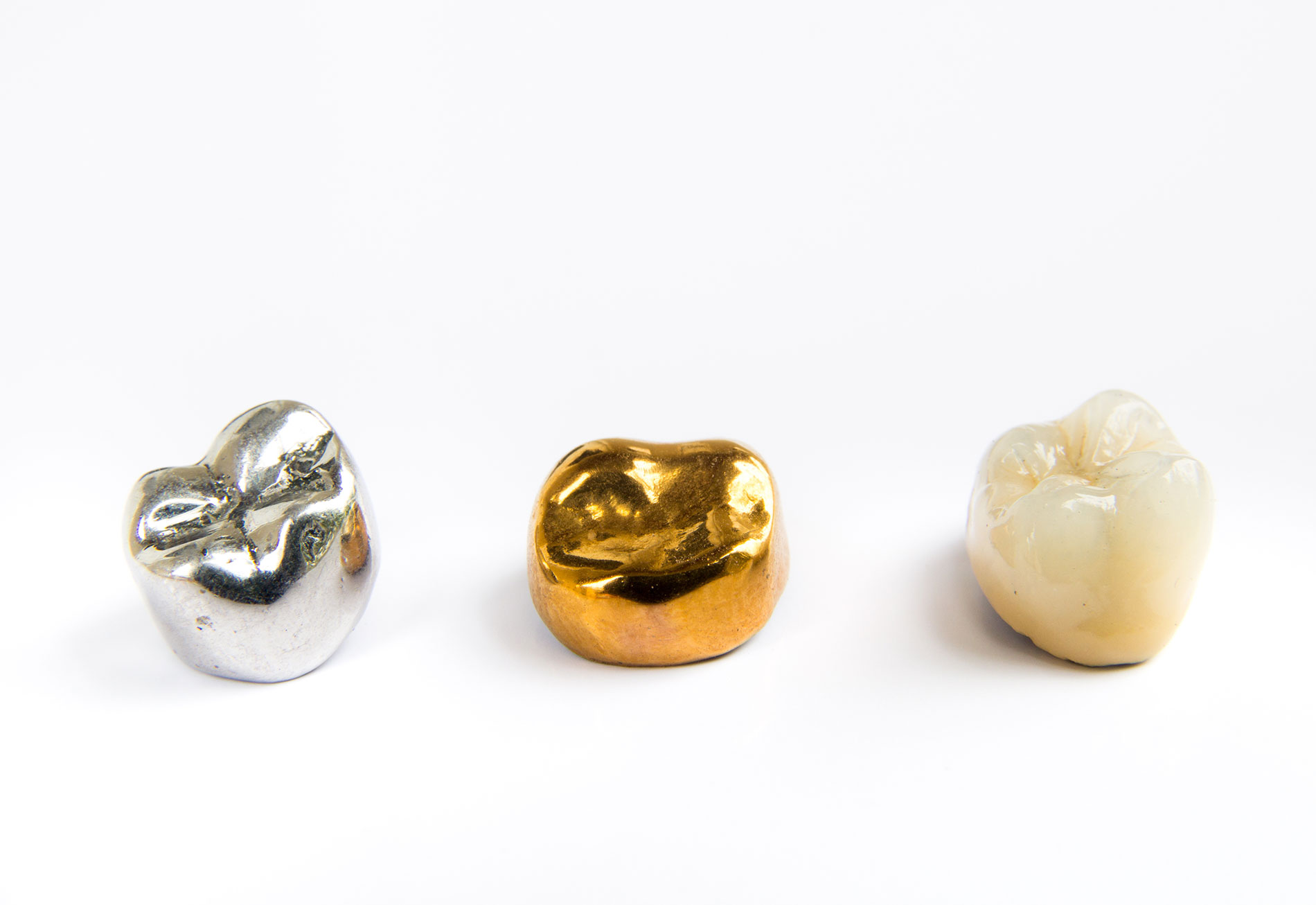
They can be made from different materials, including porcelain, composite resin, or gold, depending on what’s needed in terms of strength, appearance, and longevity.
Same Idea, Different Approach
In some cases, similar restorations can be made directly in the dental office and placed in a single visit. The concept stays the same — restoring the tooth with something stronger than a basic filling — but the method changes depending on the situation.
A Smarter Way to Restore a Tooth
Not every tooth needs a crown, and not every filling is enough. Indirect fillings offer a more balanced approach — restoring strength where it’s needed while keeping as much of your natural tooth as possible.
- #Dental Crowns
- #Dentistry History
A dental crown — the cap that restores and protects a damaged tooth — might feel like a modern solution, but it’s been around for ...

Periodontitis isn’t something that shows up overnight. It develops gradually, often starting with something as simple as plaque ...

- #Dentistry History
- #Dentures
Replacing missing teeth isn’t a modern idea — people have been trying to solve that problem for thousands of years. What’s changed ...

- #Dentistry History
A trip to the dentist today looks nothing like it did thousands — or even a few hundred — years ago. Modern dentistry is built on ...

- #Dental Fillings
- #Dentistry History
Researchers have found what may be the earliest known dental filling — a piece of beeswax used to treat a cracked tooth around ...
- #Cavity Treatment
- #General Dentistry
A cavity doesn’t go from nothing to pain overnight. It moves slowly, layer by layer, often without any clear warning at first. ...